No Specialty, No Problem: Why Being a Generalist Is an Asset
TLDR: If you are a generalist, you don’t feel like you specialize in any particular industry, field, or skill set, I have good news: Your unique variety of skills and experience - no matter how eclectic, colorful, and seemingly disconnected all of them are- is an incredible asset.
“Jack of all trades, master of none” is an old saying you may know. It originated as a compliment for a generalist with a variety of skills. I like this extended version of the sentence, of unknown origins: “Jack of all trades, master of none, though oftentimes better than master of one”
There’s nothing wrong with specializing. There is something very appealing about being an expert or a specialist in something. People look to you for answers in that particular subject matter. Perhaps you are sought out as the trusted voice in a specific topic. It’s nice to have that earned sensed of authority.
But what we don’t talk about enough is how appealing it is to be a generalist.
My purpose with this blog is to extend the love to my fellow multi-passionate people out there with a ton of skills who can relate to learned feelings of inadequacy. We are the ones who hear "Follow your passion" and immediately feel nauseated. “Follw your passion” makes us feel like we are standing at an intersection with 10+ different paths and being told one of these is the "right" one. There is only “right” for you, in the moment, based on your needs.
I’m here not only take the shame out of being a generalist but to boost your confidence in your skills, broad experience, and all of their many amazing applications.
First, a few stories:
During my job search, I was scrolling through job listings. 20-30 minutes of curiously perusing job listings turned into hours-long dopamine-seeking doom scrolling through listings, reading so many job descriptions trying to interpret every word and figure out how I could apply it to my own experience. I felt increasingly discouraged for not fitting into the well-defined boxes to be considered for any of the roles I was seeing.

Cat in a cardboard box. Unsplash.
These boxes had parameters. They were created by types of college degrees in length, many years of specific experience in width, and specialized skillsets filling in between.
What made it a slippery slope into doom scrolling job listings:
not knowing what I was looking for
not having the language to describe what it is I wanted to do
not knowing how to seek out jobs that fit my unique shape of eclectic skills and experience
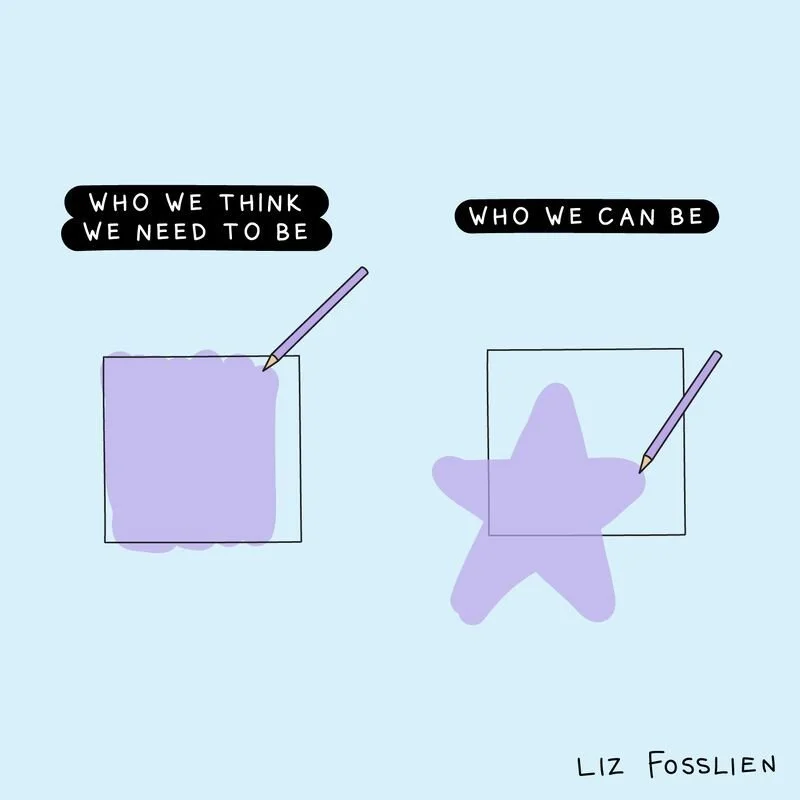
I had breath but not depth. I wasn’t a box and I wasn’t going to lie about my experience to make me seem like one. But I didn’t know how to proudly embrace the unique Koosh Ball starburst shape that made up my broad generalist’s toolkit. I had to look for roles that required a wider range of different skills AND find ways of creating opportunities that fit me and my skillset. That took networking, trying news things, exploring subjects I didn’t know about, and learning the language across different industries.
Fast forward years later.
At the end of the coaching program together, I asked my client what was the biggest ah-ha moment she got from working together.
She said throughout her career she had been building a wide range of skills, but felt bad that she didn’t have a specialty. When she realized she could reframe being a generalist as an asset, it boosted her confidence in both job applications and interviewing. She was able to see how having a wide breadth of skills would contribute to her resourcefulness and versatility, which is especially attractive to smaller companies in roles where you have to wear many hats (which is what she wanted!). And she is felt well-equipped with her many skills for her side-gig business in retail.
So if this is an asset, then why were we taught to feel bad about not having a specialty? Why have we been conditioned to believe that specializing is superior in the working world?
Toxic Professionalism, the umbrella term I use to describe old-school career standards that don’t serve most humans, makes it so generalists feel the pressure to pick one thing to be an expert in. Or at least feel the pressure to manufacture a story proving we’re specialists in some way...which can feel disingenuous.
We generalists often ask ourselves: Who am I if not specialized? What value can I really provide if I’m not an expert/working towards becoming an expert?
But having a variety of experiences and building a larger toolkit through those experiences is SUPER valuable.
How being a generalist is an asset:
First, we are innovative. We know about a lot of different things. We can see things beyond one way, relate things to other subject matters, and connect dots that others may not have connected before our brilliant minds came along. This is innovation: applying things we know in one subject to another subject area to make something new. Boom!
We are resourceful. We will quickly learn enough about something to recognize if we can experiment and figure something out on our own - or save the time and headaches by finding a specialist to help us out.
We are adaptable and versatile. We can add value to many different types of projects. So as new fires arise and new problems need to be solved, we can help wear all the many hats. We have the skills to switch gears quickly in a situation that needs it.
We are leaders. Our varied skillsets are much needed in the world because we can see things broadly, beyond in a narrow way. We can make decisions swiftly because we can recognize patterns and connect the dots quickly. That’s why we are built for leadership.

Swiss Army pocket knife - Unsplash.
You are not a pair scissors.
You are not a saw.
You are not a screwdiver.
You are the freaking Swiss Army knife.
You are a real-life Inspector Gadget (#IYKYK)
Own it. Rock it. Show the innovative, resourceful, versatile leader you were meant to be!
___
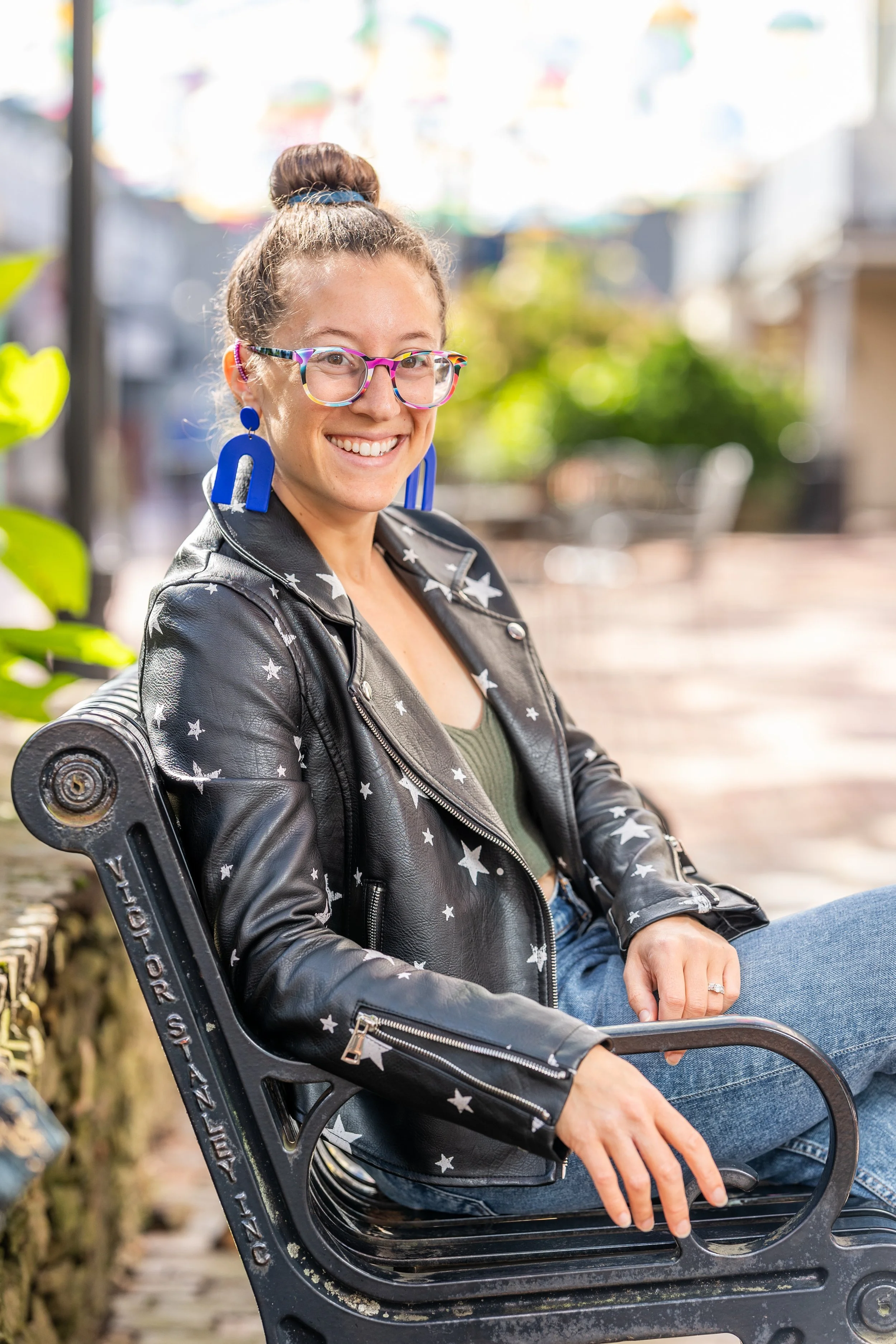
Hi! I’m Lauren Goldberg. I’m a career-focused Self-Discovery Coach. I help:
Those feeling like a career/life identity crisis and don’t know how to figure their way out.
Social impact professionals who want to use their careers to create a better world but don’t know how yet
Those who have experienced an ill-fitting or toxic work environment and want to figure out how to avoid it in the future
Anyone who wants to change their self-perception and learn more tools to advocate for yourself with more confidence in any situation
If you are curious about working together, book an exploratory call with me and we’ll figure out a plan to get you where you want to go together.
