Slowing down is often the secret sauce
This year, I've tried a new sport. I'm learning fencing right now.
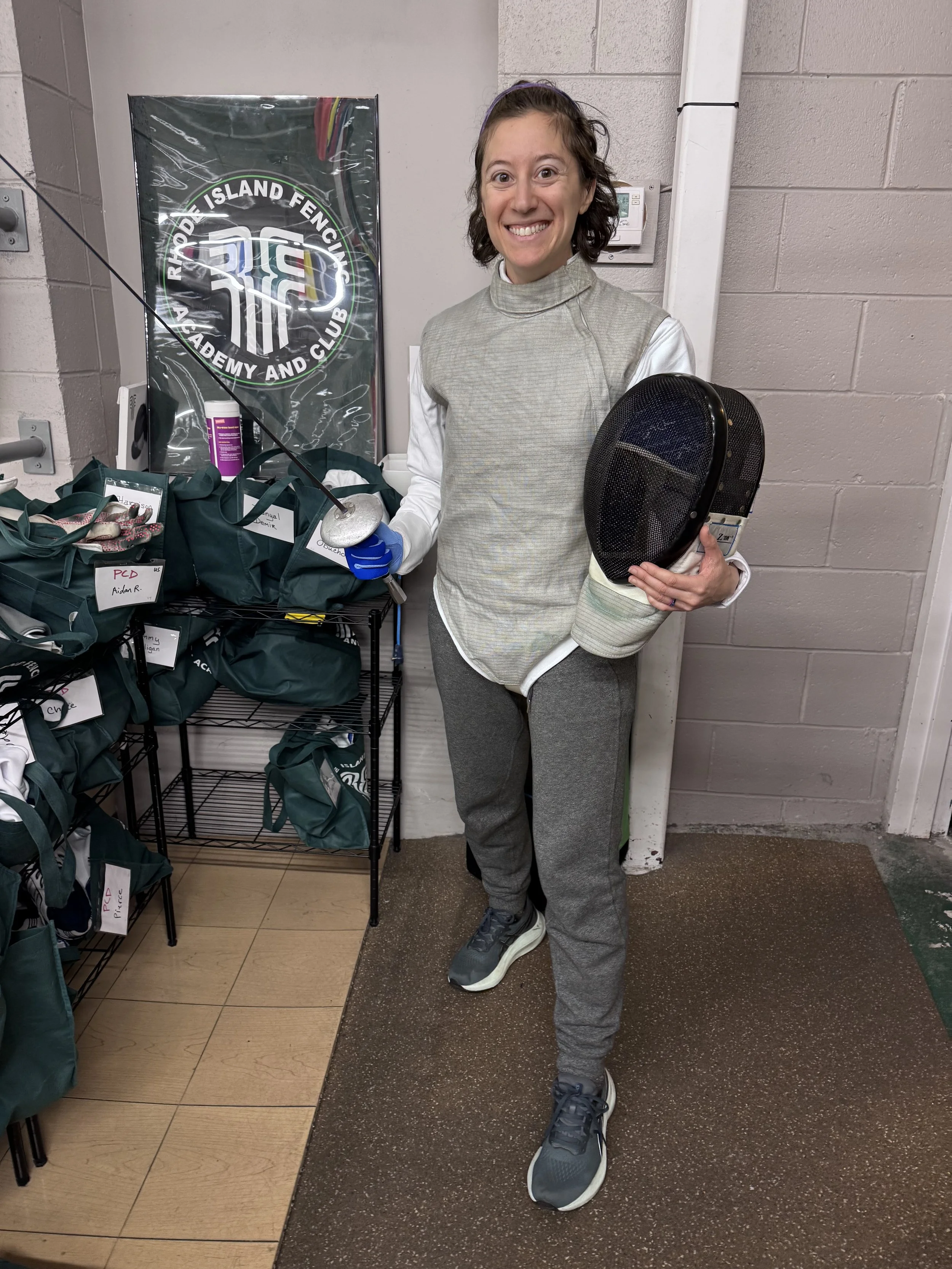
Photo of Lauren wearing fencing gear, mask in one arm and foil weapon in the other, smiling at the camera.
As an athlete for most of my life, playing sports where speed was often the goal and something I got rewarded for, I thought I could apply this to fencing right away.
But my instructors keep urging me to slow down.
Patience gives you time to assess your opponent and make better decisions about your attack or counterattack. It keeps my brain from short-circuiting and my body from freezing up in the moment. I'm learning that you always want to be moving, but better habits form when you take things slow as your body catches up to your brain's decision-making. It also keeps me breathing.
This is also an important leadership skill: being able to slow down and be present in a culture that is constantly creating urgency and chaos.
Slowing down creates space for creativity, problem-solving, and building stronger relationships. It allows others to be understood and listened to, which helps build trust.
It also creates a calmer environment, which creates a culture that counters the hustle & grind we've been taught.
It reminds us to check in with our needs and tune in to other people's needs as well.
I recently worked with a client who said that their speed, including interrupting, is a barrier to building deep relationships. By the end of the session, they had a "Slowing Down Toolkit" to remind them what they need to reset. Plus, we practiced active listening - which requires slowing down, being present, verbal/nonverbal cues, asking follow-up questions, and reflecting back what was heard to confirm understanding- something they wanted to continue using.
Slowing down is often the secret sauce.